
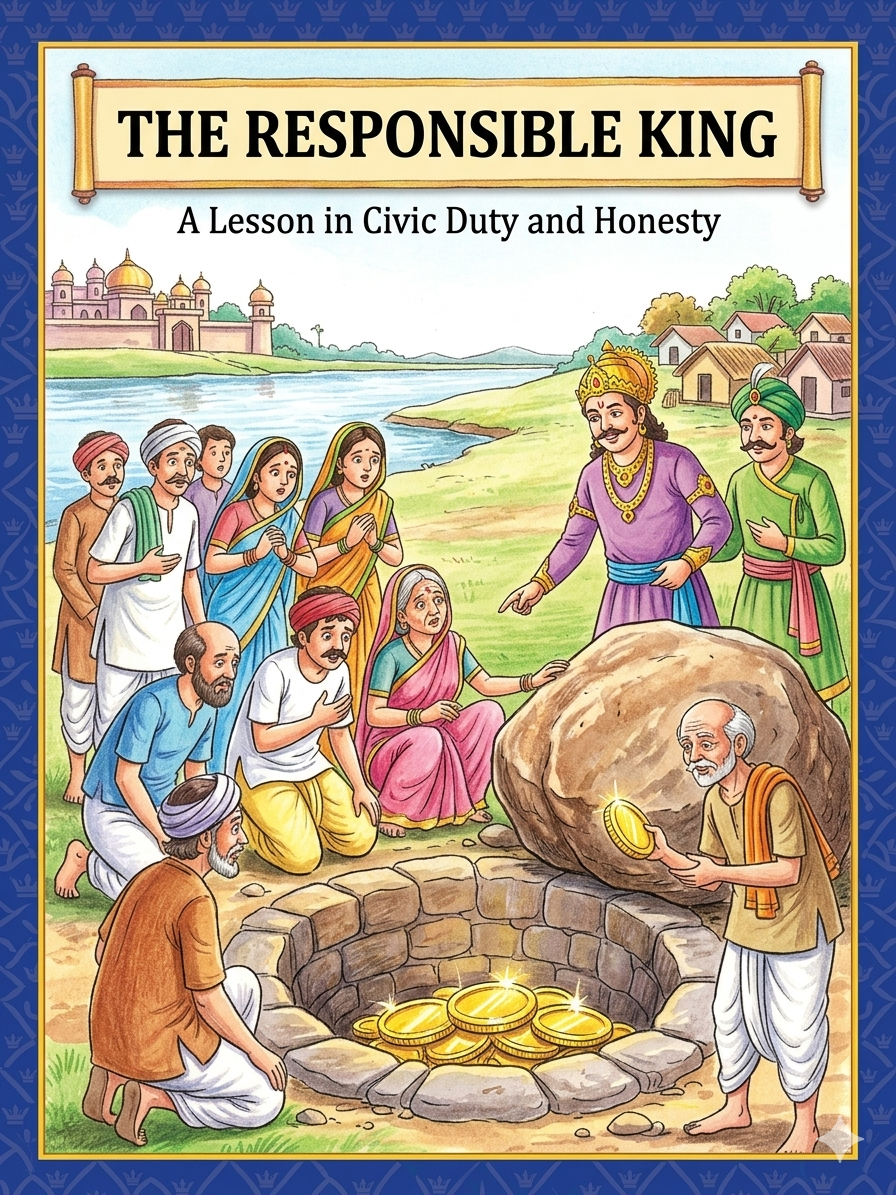
Lesson 7: The Responsible King
Exercise: True or False
1. The king lived in a palace. (True)
2. The people were responsible. (False)
-
-
- .
-
-
-
-
-
-
Lesson 7: The Responsible King (जिम्मेदार राजा)
Paragraph 1: राजा और उसका महल
- Line: Once upon a time, there was a king who lived in a palace on the banks of a river.
- उच्चारण: वन्स अपॉन अ टाइम, देयर वॉज़ अ किंग हू लिव्ड इन अ पैलेस ऑन द बैंक्स ऑफ अ रिवर।
- अर्थ: एक समय की बात है, एक राजा था जो नदी के किनारे एक महल में रहता था।
- Line: He was unhappy because the people of his kingdom were irresponsible.
- उच्चारण: ही वॉज़ अनहैप्पी बिकॉज़ द पीपल ऑफ हिज़ किंगडम वर इरिस्पॉन्सिबल।
- अर्थ: वह दुखी था क्योंकि उसके राज्य के लोग गैर-जिम्मेदार थे।
Paragraph 2: राजा की चिंता
- Line: Every time he went out in his chariot, he used to see stones and rubbish lying on the roads.
- उच्चारण: एवरी टाइम ही वेन्ट आउट इन हिज़ चैरियट, ही यूज़्ड टू सी स्टोन्स एण्ड रबिश लाइंग ऑन द रोड्स।
- अर्थ: हर बार जब वह अपने रथ में बाहर जाता, तो उसे सड़कों पर पत्थर और कूड़ा पड़ा हुआ दिखता था।
- Line: Every time he sailed in his boat, he found the river very dirty.
- उच्चारण: एवरी टाइम ही सेल्ड इन हिज़ बोट, ही फाउंड द रिवर वेरी डर्टी।
- अर्थ: हर बार जब वह अपनी नाव में यात्रा करता, तो उसे नदी बहुत गंदी मिलती थी।
- Line: “Alas! Why are my people so irresponsible?” he moaned.
- उच्चारण: “अलास! व्हाय आर माय पीपल सो इरिस्पॉन्सिबल?” ही मोन्ड।
- अर्थ: “हाय! मेरे लोग इतने गैर-जिम्मेदार क्यों हैं?” उसने दुखी होकर कहा।
- Line: “Why do they not keep the roads clean?” he thought for a while and said, “I must teach them a lesson.”
- उच्चारण: “व्हाय डू दे नॉट कीप द रोड्स क्लीन?” ही थॉट फॉर अ व्हाइल एण्ड सैड, “आई मस्ट टीच देम अ लेसन।”
- अर्थ: “वे सड़कों को साफ क्यों नहीं रखते?” उसने कुछ देर सोचा और कहा, “मुझे उन्हें सबक सिखाना चाहिए।”
Paragraph 3: राजा की योजना
- Line: One night, he took a bag of gold coins with him and went to the main road.
- उच्चारण: वन नाइट, ही टुक अ बैग ऑफ गोल्ड कॉइन्स विद हिम एण्ड वेन्ट टू द मेन रोड।
- अर्थ: एक रात, उसने अपने साथ सोने के सिक्कों का एक थैला लिया और मुख्य सड़क पर गया।
- Line: His Wazir was also with him. He saw a pit in the middle of the road.
- उच्चारण: हिज़ वज़ीर वॉज़ ऑल्सो विद हिम। ही सॉ अ पिट इन द मिडिल ऑफ द रोड।
- अर्थ: उसका वज़ीर भी उसके साथ था। उसने सड़क के बीच में एक गड्ढा देखा।
- Line: He put the gold coins in it. Then the king and the wazir covered the pit with a big stone.
- उच्चारण: ही पुट द गोल्ड कॉइन्स इन इट। देन द किंग एण्ड द वज़ीर कवर्ड द पिट विद अ बिग स्टोन।
- अर्थ: उसने उसमें सोने के सिक्के डाल दिए। फिर राजा और वज़ीर ने गड्ढे को एक बड़े पत्थर से ढक दिया।
Paragraph 4: लोगों की लापरवाही
- Line: Next day, a man came along the road in his cart which was full of coal.
- उच्चारण: नेक्स्ट डे, अ मैन केम अलोंग द रोड इन हिज़ कार्ट व्हिच वॉज़ फुल ऑफ कोल।
- अर्थ: अगले दिन, एक आदमी अपनी गाड़ी में सड़क पर आया जो कोयले से भरी थी।
- Line: He saw the big stone in the middle of the road but he was not worried about it.
- उच्चारण: ही सॉ द बिग स्टोन इन द मिडिल ऑफ द रोड बट ही वॉज़ नॉट वरिड अबाउट इट।
- अर्थ: उसने सड़क के बीच में बड़ा पत्थर देखा लेकिन उसे इसकी कोई चिंता नहीं थी।
- Line: He drove his cart round the stone.
- उच्चारण: ही ड्रोव हिज़ कार्ट राउन्ड द स्टोन।
- अर्थ: उसने अपनी गाड़ी पत्थर के बगल से निकाल ली।
- Line: Then another man came along with a flock of sheep and goats.
- उच्चारण: देन अनदर मैन केम अलोंग विद अ फ्लॉक ऑफ शीप एण्ड गोट्स।
- अर्थ: फिर एक और आदमी भेड़ों और बकरियों के झुंड के साथ आया।
- Line: The man did not pay attention to it and drove his flock round the other side of the stone.
- उच्चारण: द मैन डिड नॉट पे अटेन्शन टू इट एण्ड ड्रोव हिज़ फ्लॉक राउन्ड द अदर साइड ऑफ द स्टोन।
- अर्थ: उस आदमी ने इस पर ध्यान नहीं दिया और अपने झुंड को पत्थर के दूसरी ओर से ले गया।
- Line: Many other people also passed along the same road.
- उच्चारण: मेनी अदर पीपल ऑल्सो पास्ड अलोंग द सेम रोड।
- अर्थ: कई अन्य लोग भी उसी सड़क से गुजरे।
- Line: But all of them were so irresponsible that they did not bother to remove the stone.
- उच्चारण: बट ऑल ऑफ देम वर सो इरिस्पॉन्सिबल दैट दे डिड नॉट बोदर टू रिमूव द स्टोन।
- अर्थ: लेकिन वे सभी इतने गैर-जिम्मेदार थे कि उन्होंने पत्थर हटाने की जहमत नहीं उठाई।
Paragraph 5: सबक और पछतावा
- Line: Finally, the king called all the people of his kingdom and said, “Come, let’s remove the stone from the road.”
- उच्चारण: फाइनली, द किंग कॉल्ड ऑल द पीपल ऑफ हिज़ किंगडम एण्ड सैड, “कम, लेट्स रिमूव द स्टोन फ्रॉम द रोड।”
- अर्थ: अंत में, राजा ने अपने राज्य के सभी लोगों को बुलाया और कहा, “आओ, सड़क से पत्थर हटाते हैं।”
- Line: People were stunned to see the gold coins in the pit when they rolled the stone away.
- उच्चारण: पीपल वर स्टन्ड टू सी द गोल्ड कॉइन्स इन द पिट व्हेन दे रोल्ड द स्टोन अवे।
- अर्थ: जब लोगों ने पत्थर हटाया, तो गड्ढे में सोने के सिक्के देखकर वे दंग रह गए।
- Line: “Look, there were gold coins under the stone but no one bothered to remove the stone.”
- उच्चारण: “लुक, देयर वर गोल्ड कॉइन्स अन्डर द स्टोन बट नो वन बोदर्ड टू रिमूव द स्टोन।”
- अर्थ: “देखो, पत्थर के नीचे सोने के सिक्के थे लेकिन किसी ने पत्थर हटाने की परवाह नहीं की।”
- Line: “So no one deserves these gold coins.”
- उच्चारण: “सो नो वन डिज़र्व्स दीज़ गोल्ड कॉइन्स।”
- अर्थ: “इसलिए कोई भी इन सोने के सिक्कों का हकदार नहीं है।”
- Line: “Had you been responsible and removed the stone, the gold coins would have been yours,” the king said to his people.
- उच्चारण: “हैड यू बीन रिस्पॉन्सिबल एण्ड रिमूव्ड द स्टोन, द गोल्ड कॉइन्स वुड हैव बीन योर्स,” द किंग सैड टू हिज़ पीपल।
- अर्थ: “यदि आप जिम्मेदार होते और पत्थर हटा देते, तो सोने के सिक्के आपके होते,” राजा ने अपने लोगों से कहा।
- Line: The king ordered his wazir, “Take the gold coins to my palace.”
- उच्चारण: द किंग ऑर्डर्ड हिज़ वज़ीर, “टेक द गोल्ड कॉइन्स टू माय पैलेस।”
- अर्थ: राजा ने अपने वज़ीर को आदेश दिया, “सोने के सिक्के मेरे महल ले जाओ।”
- Line: After hearing this the people felt ashamed and sorry too and promised to be responsible citizens.
- उच्चारण: आफ्टर हियरिंग दिस द पीपल फेल्ट अशेम्ड एण्ड सॉरी टू एण्ड प्रॉमिस्ड टू बी रिस्पॉन्सिबल सिटिज़न्स।
- अर्थ: यह सुनने के बाद लोग शर्मिंदा हुए और उन्हें दुख भी हुआ और उन्होंने जिम्मेदार नागरिक बनने का वादा किया।
अभ्यास के उत्तर (Exercise Answers)
1. Comprehension Questions:
- a. Why was the king unhappy?
- Ans: The king was unhappy because the people of his kingdom were irresponsible.
- b. What did the king see every time he went out in his chariot?
- Ans: He saw stones and rubbish lying on the roads.
- c. Where did he put the gold coins?
- Ans: He put the gold coins in a pit in the middle of the road.
- d. Who covered the pit with a big stone?
- Ans: The king and his Wazir covered the pit.
- e. Why did the people not remove the stone from the road?
- Ans: Because they were irresponsible and lazy.
- f. What lesson did the king want to teach his people?
- Ans: He wanted to teach them to be responsible citizens.
2. True or False:
- a. True
- b. False
- c. True
- d. False
- f. False (The king took them back to the palace)
- g. True
3. Language Practice (Table sentences):
- The first day of the week is Monday.
- The last month of the year is December.
- The first month of the year is January.