
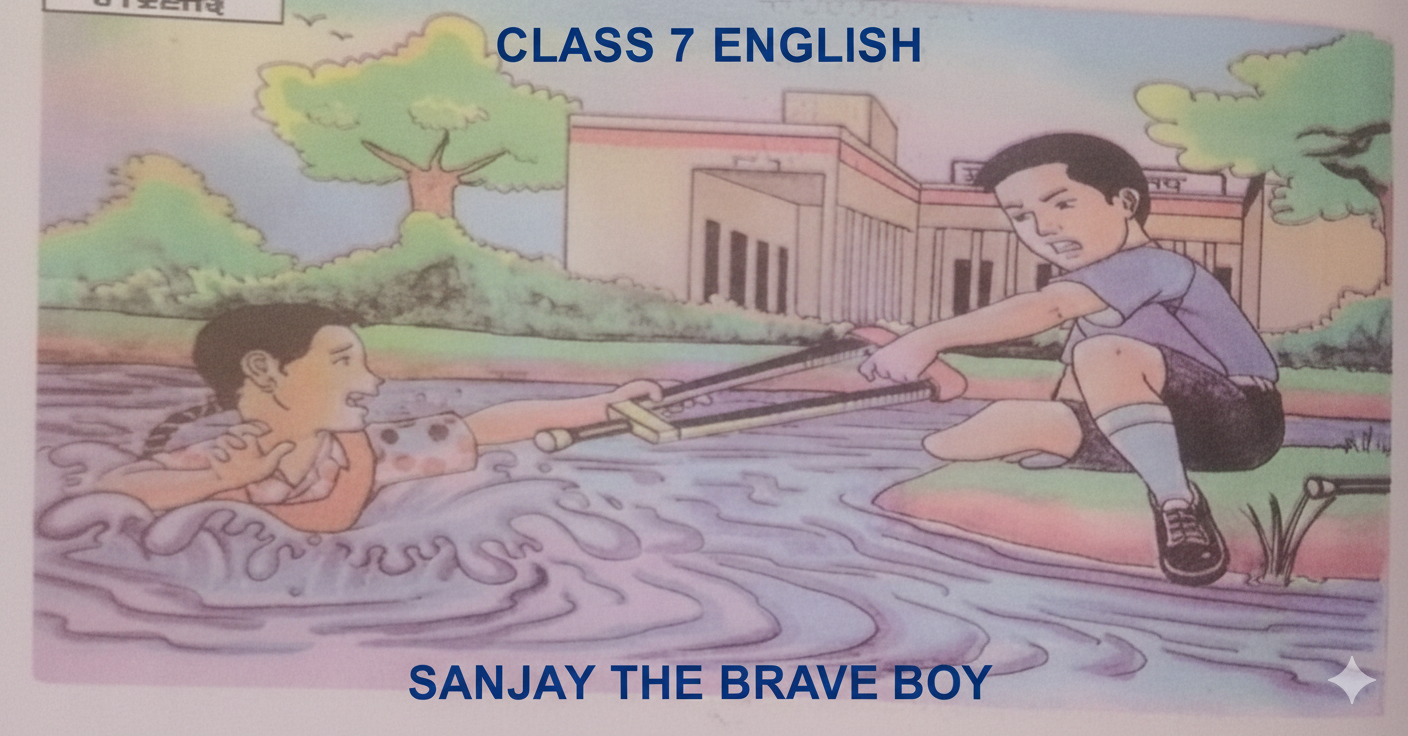
Lesson 3: Sanjay The Brave Boy
1. शब्द और अर्थ (Word Meanings)
| Word | उच्चारण | हिंदी अर्थ |
|---|
2. पाठ का अनुवाद (Story Translation)
3. अभ्यास कार्य (Exercise)
Q: Why did Sanjay avoid people?
A: Because he felt they laughed at the way he walked.
भाग 1: मुख्य शब्द (Vocabulary)
| शब्द (Word) | उच्चारण (Pronunciation) | हिंदी अर्थ (Meaning) |
|---|---|---|
| Accident | ऐक्सिडेंट | दुर्घटना |
| Neglected | निग्लेक्टेड | उपेक्षित (ध्यान न देना) |
| Company | कम्पनी | साथ / संगति |
| Praise | प्रेज़ | प्रशंसा करना |
| Tottered | टॉटर्ड | लड़खड़ाया |
| Miserable | मिज़रेबल | दयनीय / बहुत दुखी |
| Pretended | प्रिटेंडेड | दिखावा किया |
| Drowning | ड्राउनिंग | डूब रहा है |
| Canal | कनैैल | नहर |
| Crutch | क्रच | बैसाखी |
| Astonished | एस्टॉनिश्ड | आश्चर्यचकित |
| Rescued | रेस्क्यूड | बचाया |
| Confidently | कॉन्फिडेंटली | आत्मविश्वास के साथ |
भाग 2: कहानी का लाइन-बाय-लाइन अनुवाद
Page 16
- Sanjay was a student of class 7.
- उच्चारण: संजय वॉज़ अ स्टूडेंट ऑफ क्लास सेवन।
- हिंदी: संजय कक्षा 7 का छात्र था।
- He lived with his parents in the village, Shantipur.
- उच्चारण: ही लिव्ड विद हिज़ पेरेंट्स इन द विलेज, शांतिपुर।
- हिंदी: वह अपने माता-पिता के साथ शांतिपुर गाँव में रहता था।
- He had lost one of his legs in an accident.
- उच्चारण: ही हैड लॉस्ट वन ऑफ हिज़ लेग्स इन एन ऐक्सिडेंट।
- हिंदी: एक दुर्घटना में उसने अपना एक पैर खो दिया था।
- He always felt that everyone looked at his leg and laughed at the way he walked.
- उच्चारण: ही ऑलवेज फेल्ट दैट एवरीवन लुक्ड एट हिज़ लेग एंड लाफ़्ड एट द वे ही वॉक्ड।
- हिंदी: उसे हमेशा लगता था कि हर कोई उसके पैर को देखता है और उसके चलने के तरीके पर हंसता है।
- So he always tried to avoid people.
- उच्चारण: सो ही ऑलवेज ट्राइड टू अवॉइड पीपल।
- हिंदी: इसलिए वह हमेशा लोगों से बचने की कोशिश करता था।
(Mother and Sanjay Conversation)
- Mother: Wake up Sanjay! You are getting late.
- हिंदी: माँ: उठो संजय! तुम्हें देर हो रही है।
- Sanjay: Mother, I don’t want to go to school.
- हिंदी: संजय: माँ, मैं स्कूल नहीं जाना चाहता।
- Mother: Why Sanjay?
- हिंदी: माँ: क्यों संजय?
- Sanjay: I feel neglected maa. My schoolmates don’t like my company.
- हिंदी: संजय: माँ, मैं उपेक्षित महसूस करता हूँ। मेरे स्कूल के साथी मेरा साथ पसंद नहीं करते।
- Mother: My dear child, you are a strong boy. Don’t lose heart.
- हिंदी: माँ: मेरे प्यारे बच्चे, तुम एक मजबूत लड़के हो। हिम्मत मत हारो।
Page 17
- He felt miserable. He thought of his mother’s words.
- उच्चारण: ही फेल्ट मिज़रेबल। ही थॉट ऑफ हिज़ मदर्स वर्ड्स।
- हिंदी: उसे बहुत बुरा लगा। उसने अपनी माँ की बातों के बारे में सोचा।
- He kept his chin up and went to the class.
- उच्चारण: ही केप्ट हिज़ चिन अप एंड वेंट टू द क्लास।
- हिंदी: उसने अपना सिर ऊँचा रखा (हिम्मत जुटाई) और कक्षा में गया।
- The next morning, when Sanjay was going to school, he saw a girl drowning in the canal near the school.
- उच्चारण: द नेक्स्ट मॉर्निंग, व्हेन संजय वॉज़ गोइंग टू स्कूल, ही सॉ अ गर्ल ड्राउनिंग इन द कनैैल नियर द स्कूल।
- हिंदी: अगली सुबह, जब संजय स्कूल जा रहा था, उसने स्कूल के पास की नहर में एक लड़की को डूबते हुए देखा।
- He immediately offered his crutch to the girl. She held it tightly.
- उच्चारण: ही इमीडिएटली ऑफर्ड हिज़ क्रच टू द गर्ल। शी हेल्ड इट टाइटली।
- हिंदी: उसने तुरंत अपनी बैसाखी लड़की की ओर बढ़ाई। उसने उसे मजबूती से पकड़ लिया।
- After trying hard, he could pull her to the bank.
- उच्चारण: आफ्टर ट्राइंग हार्ड, ही कुड पुल हर टू द बैंक।
- हिंदी: कड़ी मेहनत के बाद, वह उसे किनारे तक खींच सका।
- Sanjay was astonished when he saw the face of the girl he rescued. She was Amit’s sister, Rita.
- उच्चारण: संजय वॉज़ एस्टॉनिश्ड व्हेन ही सॉ द फेस ऑफ द गर्ल ही रेस्क्यूड। शी वॉज़ अमित्स सिस्टर, रीटा।
- हिंदी: संजय तब हैरान रह गया जब उसने उस लड़की का चेहरा देखा जिसे उसने बचाया था। वह अमित की बहन रीटा थी।
Page 18 (The Conclusion)
- Amit: I am sorry, please forgive me for my misbehaviour.
- हिंदी: अमित: मुझे खेद है, कृपया मेरे दुर्व्यवहार के लिए मुझे क्षमा करें।
- Sanjay: It’s okay. You are my friend. Don’t feel sorry.
- हिंदी: संजय: कोई बात नहीं। तुम मेरे दोस्त हो। दुखी मत हो।
- Sanjay stepped forward confidently onto the stage to accept the ‘Bravery Award’.
- उच्चारण: संजय स्टेप्ड फॉरवर्ड कॉन्फिडेंटली ओन्टो द स्टेज टू एक्सेप्ट द ‘ब्रेवरी अवॉर्ड’।
- हिंदी: संजय ‘वीरता पुरस्कार’ स्वीकार करने के लिए आत्मविश्वास के साथ मंच पर आगे बढ़ा।
1. Answer the following questions (प्रश्नों के उत्तर दें)
a. Why did Sanjay always try to avoid people?
- उत्तर: Sanjay always tried to avoid people because he felt that everyone looked at his leg and laughed at the way he walked.
- उच्चारण: संजय ऑलवेज ट्राइड टू अवॉइड पीपल बिकॉज़ ही फेल्ट दैट एवरीवन लुक्ड एट हिज़ लेग एंड लाफ़्ड एट द वे ही वॉक्ड।
- हिंदी अर्थ: संजय हमेशा लोगों से बचने की कोशिश करता था क्योंकि उसे लगता था कि हर कोई उसके पैर को देखता है और उसके चलने के तरीके पर हंसता है।
b. How did mother help Sanjay in building up his self-confidence?
- उत्तर: Mother told him that he is a strong boy and has many good qualities. She encouraged him not to lose heart.
- उच्चारण: मदर टोल्ड हिम दैट ही इज़ अ स्ट्रॉन्ग बॉय एंड हैज़ मेनी गुड क्वालिटीज़। शी एनकरेज्ड हिम नॉट टू लूज़ हार्ट।
- हिंदी अर्थ: माँ ने उससे कहा कि वह एक मजबूत लड़का है और उसमें कई अच्छे गुण हैं। उन्होंने उसे हिम्मत न हारने के लिए प्रोत्साहित किया।
c. What did Sanjay do when he saw a girl drowning in the canal?
- उत्तर: Sanjay immediately offered his crutch to the girl to save her.
- उच्चारण: संजय इमीडिएटली ऑफर्ड हिज़ क्रच टू द गर्ल टू सेव हर।
- हिंदी अर्थ: संजय ने लड़की को बचाने के लिए तुरंत अपनी बैसाखी उसकी ओर बढ़ाई।
d. How did the students behave with Sanjay after he rescued Rita?
- उत्तर: Every student wanted to talk and shake hands with him. They clapped for him and he became everyone’s favourite.
- उच्चारण: एवरी स्टूडेंट वॉन्टेड टू टॉक एंड शेक हैंड्स विद हिम। दे क्लैप्ड फॉर हिम एंड ही बिकेम एवरीवन’स फेवरेट।
- हिंदी अर्थ: हर छात्र उससे बात करना और हाथ मिलाना चाहता था। उन्होंने उसके लिए तालियाँ बजाईं और वह सबका पसंदीदा बन गया।
2. Who said these and to whom (किसने किससे कहा)
| वाक्य (Sentence) | किसने कहा (Who said) | किससे कहा (To whom) | हिंदी अर्थ |
|---|---|---|---|
| “You are getting late.” | Mother | Sanjay | “तुम्हें देर हो रही है।” |
| “I will never go to school again.” | Sanjay | Mother | “मैं अब कभी स्कूल नहीं जाऊँगा।” |
| “Please forgive me for my misbehaviour.” | Amit | Sanjay | “कृपया मेरे दुर्व्यवहार के लिए मुझे क्षमा करें।” |
3. Word Power: Fill in the blanks (खाली स्थान भरें)
(बॉक्स के शब्दों का प्रयोग करके):
- The teacher does not like misbehaviour in the classroom. (कक्षा में दुर्व्यवहार पसंद नहीं है)
- The army rescued many people affected by flood. (सेना ने बाढ़ प्रभावित लोगों को बचाया)
- Ritu was astonished to see the beauty of the place. (रितु जगह की सुंदरता देखकर दंग रह गई)
- Ritesh entered confidently in the room for the interview. (रितेश इंटरव्यू के लिए आत्मविश्वास से कमरे में घुसा)
- There was a long queue of vehicles on the road. (सड़क पर वाहनों की लंबी कतार थी)
4. Language Practice: Opposite words (विलोम शब्द)
उपसर्ग (Prefixes) जोड़कर विलोम बनाएँ:
- Polite \rightarrow Impolite (असभ्य)
- Comfort \rightarrow Discomfort (असुविधा)
- Regular \rightarrow Irregular (अनियमित)
- Possible \rightarrow Impossible (असंभव)
- Safe \rightarrow Unsafe (असुरक्षित)
- Honest \rightarrow Dishonest (बेईमान)
5. Negative and Interrogative Sentences (नकारात्मक और प्रश्नवाचक)
| The curd is sweet. | Is the curd sweet? | The curd is not sweet. |
| They will go to Delhi. | Will they go to Delhi? | They will not go to Delhi. |
| He has written a letter. | Has he written a letter? | He has not written a letter. |
| These roses are red. | Are these roses red? | These roses are not red. |
| Nidhi has a doll. | Does Nidhi have a doll? | Nidhi does not have a doll. |